- Translators
- Translation Services
- Testimonials
- FAQ
- Contact Us
French Translator for Strathfield (NSW)
NAATI certified French translation services for Strathfield (NSW), delivered usually within 24-48 hours.
NAATI Certified
24-48 Hour Delivery
Secure Payment
Get a free quote for professional French translation in Strathfield (NSW). Complete the form for an instant quote or a response within 15 minutes.
NAATI Translators for all Locations
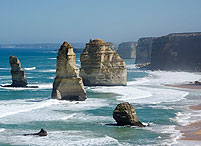 Get NAATI translation services wherever you're based in Australia. All NAATI translators have up-to-date credentials with NAATI for providing certified document translations in Australia.
- French translator Sydney
- French translator Melbourne
- Brisbane translation services
- Perth translation services
- Adelaide translation services
- Canberra translation services
- Cairns translation services
- Hobart translation services
- Launceston translation services
- Darwin translation services
Get an instant quote for professional French translation services.
NAATI French Translator for Strathfield (NSW)
 Get fast and reliable NAATI French translator for your personal documents. A PDF of the certified translation is sufficient for most official purposes in Australia.
Our professional translators can also assist with marketing translation, medical translation and complex technical translations.
- French certificate translation Strathfield (NSW)
- French document translation Strathfield (NSW)
- French driver licence translation Strathfield (NSW)
- French marriage certificate translation
- French birth certificate translation
- French marriage certificate translation
- French divorce certificate translation
- French death certificate translation
- French bank statements translation
- French payslip or salary translation
- French passport translation
- French degree or diploma translation
- French academic transcript translation
- French police report translation
- French utility bill translations
- French wills and probate translations
Strathfield (NSW) Design Services
- Update Existing Brochure - Strathfield (NSW)
This service is particularly useful for organisations looking to refresh their brochure for the new year or promote the content in multiple languages with possible adjustments to images used. - Multilingual Namecard Translations - Strathfield (NSW)
Strathfield (NSW) Valuation Services
- Independent Website Valuation Report - Strathfield (NSW)
An indepedent analysis of the value of a website, to ensure fair market valuation. This service can be particularly beneficial for businesses looking to buy, sell, or assess the value of their online assets. This website valuation report can be provided in various languages. - Independent Property Valuation Report - Strathfield (NSW)
Comprehensive property valuation reports conducted by a professional depreciation firm. These reports help clients understand the market value of their properties for various purposes, including sales, acquisitions, and financial reporting. This report can be provided in various languages.
About Strathfield (NSW)
Strathfield is a suburb in the Inner West of Sydney, in the state of New South Wales, Australia. It is located 12 kilometres west of the Sydney central business and is the administrative centre of the Municipality of Strathfield. A small section of the suburb north of the railway line lies within the City of Canada Bay, while the area east of The Boulevard lies within the Municipality of Burwood. North Strathfield and Strathfield South are separate suburbs to the north and south, respectively.
The railway came to Strathfield in 1855, with Homebush station built as one of the initial four stations on the railway line between Sydney and Parramatta. A station was sited here because of the presence of Homebush Racecourse north of Parramatta Road. The arrival of the railway spurred residential development. Subdivision of the "Redmire Estate" began in 1867, which led to residential development forming the village of "Redmire" or "Redmyre". An early buyer was one-time Mayor of Sydney, Walter Renny who built in 1868 a house they called Stratfieldsaye, possibly after the Duke of Wellington's mansion near Reading, Berkshire. It may have also been named after the transport ship of the same name that transported many immigrants - including Sir Henry Parkes - to Australia, though the transport ship was probably also named after the Duke's mansion as it was built soon after his death and was likely named in his honour.
According to local historian Cathy Jones, "ownership of [Stratfield] was transferred several times including to Davidson Nichol, who shortened the name to 'Strathfield House', then 'Strathfield'." In 1877, development had progressed sufficiently to justify the addition of a halt on the railway line at Redmyre, east of existing Homebush station. The Village of Homebush Estate, part of which forms the northern part of today's Strathfield, was subdivided in 1878. By 1885, sufficient numbers of people resided in the district to enable incorporation of its own local government. "Strathfield" as a geographical name was first established when Strathfield Council was proclaimed on 2 June 1885 by the Governor of NSW, Sir Augustus Loftus, after residents of the Redmire area petitioned the New South Wales State government for the establishment of local government. The new local government area included parts of the three established residential areas of Redmire (now central Strathfield), Homebush (now Homebush South and northern Strathfield) and Druitt Town (now southern Strathfield). Residents in Homebush and Druitt Town formed their own unsuccessful counter-petition. It is likely that the region was named Strathfield to neutralise the rivalry between Homebush and Redmire. The railway station was also renamed "Strathfield" in 1885, and it became an important interchange station when the Great Northern Railway was opened the following year, between Strathfield and Hornsby.
In Strathfield (NSW) (State Suburbs), of people aged 15 years and over, 44.2% of people were in a registered marriage and 4.2% were in a de facto marriage.
In Strathfield (NSW) (State Suburbs), 34.4% of people were attending an educational institution. Of these, 14.9% were in primary school, 17.1% in secondary school and 40.8% in a tertiary or technical institution.
In Strathfield (NSW) (State Suburbs), 12.2% of people had both parents born in Australia and 75.6% of people had both parents born overseas.
In Strathfield (NSW) (State Suburbs), of people aged 15 years and over, 59.5% did unpaid domestic work in the week before the Census. During the two weeks before the Census, 19.6% provided care for children and 10.2% assisted family members or others due to a disability, long term illness or problems related to old age. In the year before the Census, 15.7% of people did voluntary work through an organisation or a group.
In Strathfield (NSW) (State Suburbs), 13.3% of single parents were male and 86.7% were female.
In Strathfield (NSW) (State Suburbs), of couple families with children, 24.1% had both partners employed full-time, 6.1% had both employed part-time and 18.0% had one employed full-time and the other part-time.
In Strathfield (NSW) (State Suburbs), 93.5% of private dwellings were occupied and 6.5% were unoccupied.
In Strathfield (NSW) (State Suburbs), of occupied private dwellings 6.3% had 1 bedroom, 34.5% had 2 bedrooms and 21.7% had 3 bedrooms. The average number of bedrooms per occupied private dwelling was 3. The average household size was 3 people.
In Strathfield (NSW) (State Suburbs), of all households, 71.4% were family households, 17.7% were single person households and 10.9% were group households.
In Strathfield (NSW) (State Suburbs), 16.5% of households had a weekly household income of less than $650 and 28.4% of households had a weekly income of more than $3000.
In Strathfield (NSW) (State Suburbs), 37.2% of occupied private dwellings had one registered motor vehicle garaged or parked at their address, 25.1% had two registered motor vehicles and 14.7% had three or more registered motor vehicles.
In Strathfield (NSW) (State Suburbs), 86.3% of households had at least one person access the internet from the dwelling. This could have been through a desktop/laptop computer, mobile or smart phone, tablet, music or video player, gaming console, smart TV or any other device.
In Strathfield (NSW) (State Suburbs), 47.7% of Aboriginal and/or Torres Strait Islander people were male and 52.3% were female. The median age was 25 years.
In Strathfield (NSW) (State Suburbs), for dwellings occupied by Aboriginal and/or Torres Strait Islander people, the average household size was 3.5 persons, with 1 persons per bedroom. The median household income was $2,100.
In Strathfield (NSW) (State Suburbs), for dwellings occupied by Aboriginal and/or Torres Strait Islander people, the median weekly rent was $500 and the median monthly mortgage repayment was $0.
About the French Language

French is an official language in 29 countries across multiple continents, most of which are members of the Organisation internationale de la Francophonie (OIF), the community of 84 countries which share the official use or teaching of French. French is also one of six official languages used in the United Nations. It is spoken as a first language (in descending order of the number of speakers) in France; Canada (provinces of Quebec, Ontario and New Brunswick as well as other Francophone regions); Belgium (Wallonia and the Brussels-Capital Region); western Switzerland (Romandy-all or part of the cantons of Bern, Fribourg, Geneva, Jura, Neuchâtel, Vaud, Valais); Monaco; parts of Luxembourg; parts of the United States (the states of Louisiana, Maine, New Hampshire and Vermont); northwestern Italy (autonomous region of Aosta Valley); and various communities elsewhere.
French is estimated to have about 76 million native speakers; about 235 million daily, fluent speakers; and another 77-110 million secondary speakers who speak it as a second language to varying degrees of proficiency, mainly in Africa. According to the OIF, approximately 300 million people worldwide are "able to speak the language", without specifying the criteria for this estimation or whom it encompasses. According to a demographic projection led by the Université Laval and the Réseau Démographie de l'Agence universitaire de la Francophonie, the total number of French speakers will reach approximately 500 million in 2025 and 650 million by 2050. OIF estimates 700 million by 2050, 80% of whom will be in Africa.